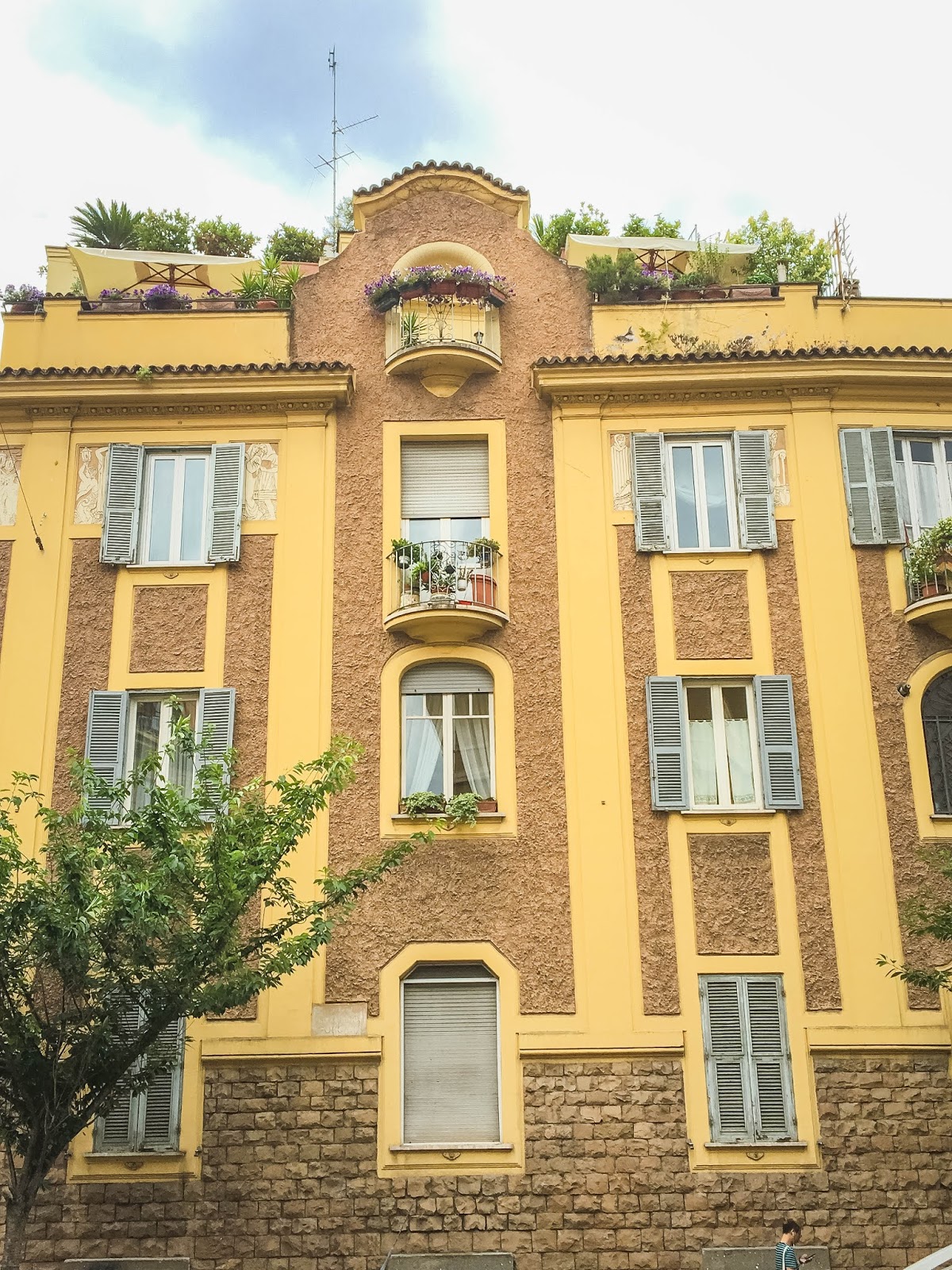
Showing posts with label Rome. Show all posts

Friday, June 18, 2021

Interesting Religious Relics of Europe

I stumbled upon a lot of relics from Jesus that you can visit, many in Rome. Rome's churches are filled with countless religious relics. Relics can include anything from the body parts of a saint to shards of the True Cross, to pieces of cloth that have rubbed against a saint's tomb. Rome has some of the most important and unusual relics.

Basilica Santa Prassede houses a segment of the pillar or column upon which Jesus was flogged and tortured before his crucifixion in Jerusalem. The relic was discovered in the early 4th century by Saint Helena (mother of the Roman Emperor Constantine I) who at the age of eighty undertook a pilgrimage to the Holy Land, where she founded churches for Christian worship and rescued relics associated with the crucifixion of Jesus on Calvary. In 1223, Cardinal Giovanni Colonna, an emissary to the Holy Land in 1223 was said to have obtained this artifact and brought it to Rome. Among these legendary relics retrieved by Helena, which included pieces of the True Cross.


The Scala Sancta
The Scala Sancta (Holy Stairs) is a set of 28 white marble steps that are Roman Catholic relics located in an edifice on the extraterritorial property of the Holy See in Rome, Italy proximate to the Archbasilica of Saint John in Laterano. Officially, the edifice is titled the Pontifical Sanctuary of the Holy Stairs (Pontificio Santuario della Scala Santa) and incorporates part of the old Papal Lateran Palace. Replica stairs flank the original staircase, which may only be climbed on one's knees. The Holy Stairs lead to the Church of Saint Lawrence in Palatio ad Sancta Sanctorum.

According to Roman Catholic tradition, the Holy Stairs are the steps leading up to the praetorium of Pontius Pilate in Jerusalem on which Jesus Christ stepped on his way to trial during his Passion. The Stairs reputedly were brought to Rome by Saint Helena in the fourth century. For centuries, the Scala Sancta has attracted Christian pilgrims who wish to honor the Passion of Jesus Christ.
The Scala Sancta may only be ascended on the knees. 

Santa Croce in Gerusalemme:
Houses part of the Elogium or Titulus Crucis (the inscribed tablet that hung over Jesus during his crucifixion,) two thorns of the Crown of Thorns, part of a nail, and three small wooden pieces of the True Cross. A much larger piece of the True Cross was taken from the Basilica on the instructions of Pope Urban VIII in 1629 to St. Peter's Basilica, where it is kept near the colossal statue of St. Empress Helena. The Holy Sponge is also here. ‘The Doubting Finger of St Thomas’ is here inside a glass case. In the Bible, ‘Doubting’ Thomas was unable to accept the resurrection of Christ, even though he stood there before him. So Christ allowed Thomas the Apostle to put his finger inside the wound made in his side by a Roman soldier’s lance.

Saint Peter’s Basilica:
The Veil of Veronica used to wipe the sweat from Jesus' brow as he carried the cross, is claimed to bear the likeness of the face of Christ.
The Image of Edessa is also known as the Mandylion is in the Matilda Chapel of the Vatican Palace.

Basilica of Santa Maria Maggiore:
Wooden pieces claimed to be remnants of the manger of baby Jesus, reside in the Holy Crib reliquary at the Basilica of Santa Maria Maggiore in Rome. It is kept inside a crystal reliquary below the high altar. In 2019 a fragment of the crib was removed from the Holy Crib reliquary and placed on permanent display at the Church of Saint Catherine in Bethlehem. Here is also another piece of the True Cross. There are also the tombs of St. Matthew, St. Jerome and Pope Pius V. 


San Giovanni in Laterano: 
Here you can see pieces of the cedar table that are said to be used by Christ at the Last Supper,
the Altar of the Holy Sacrament, the heads of both St. Peter and Paul, as well as the ‘Holy Umbilical Cord.’
On the other side of the road from Basilica di San Giovanni is an experience you will be sure to remember from your visit to Rome. The Scala Santa church by Rome standards is a rather small obscure church from outside.


The Mouth of Truth
San Paolo Fuori le Mura contains the tomb of St. Paul and a set of chains believed to be the prison chains of St. Paul.

San Pietro in Vincoli: This church houses the prison chains of the church’s first pope, St. Peter.

Santa Maria in Cosmedin houses the Bocca della Verita (The Mouth of Truth) and casket of St. Valentine including the saint’s skull.


Saint Peter's Basilica:
The entrance to Saint Peter's Basilica has spiritual significance as it is written: “I am the gate. Whoever enters through me, will be safe. He will go in and out, and find pasture.”(John 10:9)

St. Peter's is a church built in the Renaissance style located in Vatican City. Designed principally by Donato Bramante, Michelangelo, Carlo Maderno, and Gian Lorenzo Bernini, St. Peter's is the most renowned work of Renaissance architecture and the largest church in the world. It is in the sovereign jurisdiction of the Vatican City State, and not that of Italy.

After the crucifixion of Jesus, it is recorded in the Biblical book of the Acts of the Apostles that one of his twelve disciples, Simon known as Saint Peter, a fisherman from Galilee, took a leadership position among Jesus' followers and was of great importance in the founding of the Christian Church.

The entire church is here because St Peter's tomb is below. The shrine can be viewed on three levels; the basilica floor, the grottoes below, and the ancient Necropolis on the lowest level. 

The only way to visit the Necropolis is if you're fortunate enough to book a Scavi tour,  where you get to see a piece of his ancient tomb memorial.  The end of the tour provides a time for prayer while you view the bones found there.

The Grottoes offer the most direct view of the tomb area.  Here you can look directly into the Confessio area at the Niche of the Pallium (the wall in front of the tomb). 
Vatican Grottoes are free and easy to miss!
The Vatican Grottoes is a vast underground graveyard or crypt and can be found just below the Renaissance basilica and above Constantine’s 4th-century basilica. The narrow entrance stairway down from within the basilica is not the most obvious so if this is important to you ask for guidance at the information desk. It houses the tombs of scores of popes as well as kings and queens from the 10th century, over 100 tombs are here! The monuments to Paul VI (1978) and Pope John Paul II (2005) are also in the grottoes.
The Vatican Grottoes are free to enter and are open every day from 7am-6pm, April-September and 7am-5pm, October-March.
No photography allowed. You have to be silent in the Grottoes.
Make this your last call after your tour of the basilica, because once you exit the Grottoes you will be outside of the Basilica.

To pay a little visit to St Peter from the basilica floor, stand before the Papal Altar and look into the Confessio below. The great cupola above and the baldachino around the altar, are there to remind you that "Peter is here".

If you don't mind looking a bit touristy, get in line to place your hand on the right foot of the St Peter statue, not far from the Papal Altar, beside the St Longinus pier. This isn't just a popular photo op, but an ancient devotion confirmed by the worn-away toes on St Peter's foot.


St Peter’s Square:
At the center of the square is an ancient Egyptian obelisk made of red granite, 84 ft tall, supported on bronze lions and surmounted by the Chigi arms in bronze, in all 135 ft to the cross on its top. The obelisk was originally erected at Heliopolis, Egypt, by an unknown pharaoh. During the Middle Ages, the gilt ball on top of the obelisk was believed to contain the ashes of Julius Caesar.
On Sundays at noon, the Pope usually delivers a blessing from his window for people gathered in St. Peter's Square.

And some that can be found outside of Rome:


The Shroud of Turin is the best-known and intensively studied relic of Jesus.  You can find it in Turin, Italy in the Chapel of the Holy Shroud. It is the burial cloth of Christ. When photographed in 1979 the negative revealed a more detailed image imprint of a body, which some see as beyond the capacities of medieval forgers.


St Mark's Campanile in Venice:
The Last Supper
The knife used by Jesus during the Last Supper was also a matter of veneration in the Middle Ages, according to the 12th-century Guide for Pilgrims to Santiago de Compostela. According to French traveler Jules-Léonard Belin, the knife used by Jesus to slice bread was permanently exhibited in the Logetta of St Mark's Campanile in Venice.

St. Paul's Monastery on Mount Athos claims to have relics of Gifts of the Magi, while Dubrovnik's Cathedral, Croatia, claims to have the swaddling clothes the baby Jesus wore during the presentation at the Temple.

Cathedral of Valencia, Valencia, Spain
Santo Cáliz de Valenciam; The Holy Chalice is the container Jesus used at the Last Supper to serve wine

Crown of Thorns: Notre-Dame Cathedral in Paris
a piece of the True Cross from Rome as delivered by Saint Helena, along with a Holy Nail and the Crown of Thorns. Saint John tells that, in the night between Maundy Thursday and Good Friday, Roman soldiers mocked Jesus by placing a thorny crown on his head (John 19:12). The crown is a circle of cane bundled together and held by gold threads. The thorns were attached to this braided circle, which measures 21 centimeters in diameter. The seventy thorns were reportedly divided up between the Byzantine emperors and the Kings of France.

The accounts of pilgrims to Jerusalem report the Crown of Thorns. In 409, Saint Paulinus of Nola states the Crown was kept in the basilica on Mount Zion in Jerusalem. In 570, Anthony the Martyr reports the Crown of Thorns in the Basilica of Zion. Around 575, Cassiodorus wrote, "Jerusalem has the Column, here, there is the Crown of Thorns!" Between the 7th and the 10th centuries, the Crown of Thorns was moved to the Byzantine emperors' chapel in Constantinople for safekeeping. In 1238, the Latin Emperor Baldwin II of Constantinople pawned the relics for credit to a Venetian bank.

Saint Louis, the king of France redeemed the Crown from the Venetian Bank. On 10 August 1239, the king deposited 29 relics in Villeneuve-l'Archevêque. On 19 August 1239, the relics arrived in Paris. Wearing a simple tunic and with bare feet, the King placed the Crown of Thorns and other relics in the palace chapel in a structure he commissioned. During the French revolution, the relics were stored in the National Library. After the Concordat in 1801, the relics were given to the archbishop of Paris who placed them in the Cathedral treasury on 10 August 1806. Since then, these relics have been conserved by the canons of the Metropolitan Basilica Chapter, who are in charge of venerations, and guarded by the Knights of the Order of the Holy Sepulchre of Jerusalem. Napoleon I and Napoleon III each offered reliquaries for the crown of thorns. They were on display at Notre-Dame Cathedral during scheduled religious ceremonies, until a serious fire struck the cathedral on 15 April 2019.

Other claimed relics, based on the Crucifixion of Christ include:
The parish church of Argenteuil, France:
The Holy Coat: The possession of the seamless garment of Christ (John 19:23), for which the soldiers cast lots at the Crucifixion. The Argenteuil church claims that their Holy Coat was brought by Charlemagne.

Church of the Holy Sepulchre in Jerusalem
Golgotha,  the crucifixion site inside the church the crucifixion site consists of a pile of rock about 23 ft long by 9.8 ft wide by 16 ft.

Nails venerated as those of Christ's crucifixion:
In the Basilica of Santa Croce in Gerusalemme in Rome.
In the Holy Lance of the German imperial regalia in the Hofburg Palace in Vienna.
In the Iron Crown of Lombardy in the Cathedral of Monza.
In the treasury of Trier Cathedral.
In Bamberg Cathedral.
In the form of a bridle, in the apse of the Cathedral of Milan (see Rito della Nivola)
In the form of a bridle, in the cathedral treasury of Carpentras.
In the monastery of San Nicolò l'Arena in Catania
In the cathedral of Colle di Val d'Elsa, near Siena

The Archbasilica of St. John Lateran:
A section of the Holy Umbilical Cord believed to remain from the birth of Christ.

The Holy Prepuce, or the Holy Foreskin is one of several relics attributed to Jesus, a product of the circumcision of Jesus. At various points in history, a number of churches in Europe have claimed to possess Jesus's foreskin, sometimes at the same time. Various miraculous powers have been ascribed to it. The foreskin was looted during the Sack of Rome in 1527. The German soldier who stole it was captured in the village of Calcata, north of Rome, later the same year. The foreskin housed in Calcata became a must-see destination on the pilgrimage map. The Holy Foreskin was paraded through the streets as recently as 1983 on the Feast of the Circumcision, which was formerly marked by the Roman Catholic Church around the world on January 1 each year. The practice ended, however, when thieves stole the jewel-encrusted case, contents and all. Following this theft, it is unclear whether any of the purported Holy Prepuces still exist. In a 1997 television documentary for Channel 4, British journalist Miles Kington traveled to Italy in search of the Holy Foreskin, but was unable to find any remaining example. On December 22, 2013, National Geographic Channel broadcast a documentary starring Farley called "The Quest for the Holy Foreskin." In 1983, however, parish priest Dario Magnoni announced, "This year, the holy relic will not be exposed to the devotion of the faithful. It has vanished. Sacrilegious thieves have taken it from my home." He had reportedly kept it in a shoebox in the back of a wardrobe. Citing the Vatican's decree of ex-communication if anyone spoke of the Holy Foreskin, Magnoni refuses to further discuss the event, as does the Vatican. As a result, villagers' theories of the crime vary from theft for lucrative resale to an effort by the Vatican to quietly put an end to the practice it had attempted to end by ex-communication years ago. Some residents speculate that Magnoni may have been the culprit. Innnterestingggg. I found a pretty interesting book that I enjoyed reading way too much, on the subject of The Holy Foreskin. I highly recommend you add it to your book club list! It is: An Irreverent Curiosity: In Search of the Church's Strangest Relic in Italy's Oddest Town 


Holy Blood relic in Santa Maria della ScalaSiena

Relics of Jesus's Blood around the world:
Santa Maria della Scala, Siena, Italy 
Basilica of the Holy Blood, Bruges, Belgium
Weingarten Abbey, Germany
Abbey of the Holy Trinity, Fécamp, France
St. James's Church, Rothenburg ob der Tauber, Germany
Basilica di Sant'Andrea di Mantova, Mantua, Italy
The Sudarium of Oviedo
The Relic of the Holy Blood, Westminster, England


Cappella del Sacro Cingolo in Prato Cathedral in Prato, Italy, Santa Maria della Scala in Siena, Italy, and Malankara Church in India all claim to have part of the Virgin Mary's girdle!


Monday, June 14, 2021

Rome, Italy

                                          
After an extremely not fun 10 hour drive from Switzerland, we arrive in Rome. I only survived by sleeping and pain medicine since it was THE DAY AFTER MY FALL! This was crazy. I was unable to sleep until we got through the Swiss Alps. It was a rainy and snowy day and we were driving through some seriously scary mountain roads that had no sides, just cliff drops right out your window. We actually drove two hours up a mountain just to find out the road we needed to be on to get to Italy was closed due to ice and had no other option than to drive back down and find another route to Italy. I prayed the entire time up and down that mountain. I was sure I was going to die since I hadn't died the day before it must have meant to be. Why was the road we were on even open?! Guys, turns out we were on one of Europe's most dangerous roads! We had no idea until I used Google Lens to identify a picture I had taken quickly with my phone as we entered a tunnel. I was curious to find out what this painting next to the entrance meant.  Why on earth did our TomTom GPS system have us going this way? This area was called the Devil's Bridge. Passo del San Gottardo is a high mountain pass, cobbled road,  located in central Switzerland, at an elevation of 6,860 ft above sea level. It's one of the highest mountain roads of the Alps. It is only open between June and October and closed daily 6 pm-8.00 am. We were there on June 11. It had just re-opened and was so snowy we could not even see the crazy large gorge beneath us! If our family has not shown you to believe in miracles through our struggles........This cobbled road has very scary twists and turns with unimaginable drops. It’s one of the most vital roads in Europe stretching for 40 miles between German-speaking Andermatt and the Italian-speaking village of Biasca along the route to Milan.
                                             
A lot of ancient bridges across Europe are referred to as the Devil’s Bridge. These bridges were built under such challenging conditions that successful completion of the bridge required a heroic effort on the part of the builders and the community, ensuring its legendary status. This particular devil’s bridge or Teufelsbrücke is located across the Schöllenen Gorge in the scenic Reuss valley in the canton of Uri, in Switzerland. According to the legend, the Devil himself created this bridge. The story goes around 800 years ago, in the St. Gotthard Pass of the Swiss Alps, the villagers from nearby Andermatt found crossing the river an impossible task. Reluctantly, they turned to an unlikely source of help: the Devil. He agreed to the task but with one condition; he would have the soul of the first to cross the bridge. When that bridge was finished, the villagers chased a goat over the bridge, meaning the Devil would have its soul and not one of theirs. Angered by this trickery, the Devil seized a 220-ton stone to smash the newly completed bridge. Before he could do so, however, he was stopped in his tracks by a holy man with a crucifix and fled, dropping the stone. You can now see the Devil's Stone near the town of Göschenen.
If you don't believe the local legend, then perhaps this alternative history will sound more credible. In 1230 a wooden bridge was indeed constructed, named the Devil's Bridge. Crossing that 13th century bridge was likely a scary experience as it shook several hundred feet over the water and got terrifyingly close to the water when the river was full. Since then, the wooden bridge has collapsed and two bridges have been built to take its place. The wooden bridge was heavily damaged in the Napoleonic Wars and later replaced in the 1820s. Much of the structure of that bridge survives today, strengthened by a more sturdy construction below it built in the 1950s. The bridge still remains a frightening experience to cross, due to the height in the Swiss mountains and the raging river below. Drive over this bridge to recreate the terrifying journeys of old, or enjoy a hike around the picturesque mountain area and admire the bridge and the Schöllenen Gorge in all its majesty.
Road trip Pros
After that tormenting drive was over and we passed into the calm terrain of Italy, I took my pain medicine and went to sleep. I do believe we had a normal travel day stop somewhere at a McDonalds, but you would have to ask Brian.
                               
I am used to explaining how the oldness of Paris to people in the states, but Rome is on another level. Old for buildings in the United States is 1800s, 1700s if you're on the East Coast.  Paris, the 1200s. Rome is BEFORE JESUS! I have become obsessed with finding all of the places to visit where you can actually view items from before Jesus. Actually from BC! There have been discoveries of archaeological evidence of human occupation of the Rome area from approximately 14,000 years ago!

After arriving in the eternal city- Rome, we were the happiest people in the planet. We stayed
 at the Sheraton Roma Hotel and Conference Center free using hotel points! We had executive lounge access and immediately went to enjoy it. There was complimentary alcohol and small bites, a front rooftop patio area as well as a back one that included a rooftop vegetable garden. It was so nice to have another posh area to recover other than my hotel room. I spent 5 days at the hotel mending my wounds and not exploring the city. It was much needed healing time though. The kids spent their days swimming between breakfast, lunch, and dinner in the lounge. There was an evening beverage offered that was an Aperol Spritz. I don't really drink, but instead of taking pain meds, I chose to have an evening beverage. This spritz became my favorite drink in Italy. It is 3 parts Prosecco, 2 parts Aperol, 1 part soda water & an orange slice, served over ice. 
                                        
 Briella fell in love with a dish that was served in the evening, it was rice with raw calamari. We did not explain what it was, just let her eat, bowl after bowl after bowl. She hasn't really fallen in love with a food like that before. It was gorgeous to watch my miracle enjoy something as pure as eating. We came on this trip to experience moments like this. 
                                      
We met a wonderfully charming lady named Bonnie. Bonnie was living in the hotel because she came to Rome for what I call Medical Tourism. She found a world-renowned doctor that gave her the hope of saving her sight. She was full of great stories on where to eat and what to do. It made us feel like we were visiting with family since we were missing ours for a month now. It was like a temporary Grandmother for the girls. We didn't have time to try it, but Bonnie recommends eating at
Osteria il Grattacielo in Siena, Italy. 
Rooftop Club Lounge

We had the craziest experience at the pool one afternoon. I laid recovering from the fall in a lounge chair next to the pool, where Brian and the girls were swimming. I had picked a shaded area and a father with his little girl came to sit in the shade next to me. I saw a bee under their chair and warned them, not wanting this beautiful young girl to get stung. We then started chatting. They were also from the states. Briella was drawn to this girl who looked like she could be Briella's sister. They both had stunning aqua eyes and blonde hair with similar features. There are moments in life that are just too incredibly big to be coincidences, this was one of them. It turns out that both Briella and the other beauty are both micropreemies! No wonder they shared an obvious special bond! When the mother came to join us at the pool, we told her what we had found out and even more coincidences were found! I feel like if we lived closer to this family, they would be such a big part of our lives. I cannot wait until the gorgeous warriors meet up again. How amazing would it be if they keep in touch and as adults still enjoy being in each other's lives? Goosebumps. I cannot even begin to put into words what this random meeting meant to us.
After several days of resting and healing at the hotel, I felt well enough to visit one of my must sees on the trip. I had to see the Keyhole in Rome! On Aventine Hill there is a door at the Knights of Malta building, that has a peephole that has a magical optical illusion view of St Peter's Basilica, making it look closer than it is.  The view is lined with bushes and is indescribable. I loved this for my first outing since the fall because it is not crowded. We Ubered there and I was not let down with this experience! This was Aubrey's favorite thing in Rome as well. 


Next door to the door is a lovely park overlooking the city with great open views, surrounded by orange trees. 
                        
                                        
We browsed through the ancient church, Santa Sabina, built in 422 (Yes 422! Not 1422!) that is next door to the keyhole. We were in awe of the gold roof. There were pope's buried in the floor of the church, and a pillar from the building that was there before the basilica, which means it is way older than 422! The wooden door of the basilica is from 430–432. The doors on the exterior of Santa Sabina are made of cypress wood, and originally had a layout of twenty-eight panels. Eighteen of its wooden panels survived — all but one depicting scenes from the Bible. Most famous among these is the panel that is the first known publicly displayed image of the crucifixion of Christ. It depicts Christ's crucifixion. Above the doorway, the interior preserves an original dedication in Latin hexameters. I have a billion photos of this Basilica that I love, so scroll down for the next paragraph if you are over all of my photos. 
Santa Sabina


Latin hexameter


Painted in 1559 by Taddeo Zuccari. Christ is flanked by a good thief and a bad thief, seated on a hill while lambs drink from a stream at its base.
a framed hole in the floor, exposing a Roman era temple column that pre-dates Santa Sabina. This appears to be the remnant of the Temple of Juno erected on the hilltop site during Roman times, which was likely razed to allow construction of the basilica.

Basilica of Santa Sabina

                                 
                                Burial site 
           
                            
We walked down Aventine Hill to the Circus Maximus. Built around 753 BC and used as an ancient Roman chariot-racing stadium. Stunning.
The Orange Trees Garden (Italian: Giardino degli aranci)

Circus Maximus
Circus Maximus
A 10 minute walk from the Circus Maximus found us at the Colosseum! What a beautiful, ancient walk


The Arch of Constantine is dedicated to the emperor Constantine the Great. Built in 315. It is an arch of Triumph built to remember and celebrate the victory of Constantine against Maxentius in the Battle of Ponte Milvio of 312


Colosseum 


Trying my best to smile with a face still injured from the fall

                           
The holes in the Colosseum were made by thieves stealing the iron for use in the creation of other structures or for weaponry. During the construction process, workers used iron clamps in between heavy bricks to secure them together to get rid of the use of mortar. After the fall of Rome, this metal material of around 200 tons became highly valued. Many stones and decorative marble from the amphitheater were taken for the building of St Peter’s Basilica and other structures from the 16th century. Despite the fact that there were serious earthquakes that damaged the Colosseum in previous centuries, it was mostly damaged by people, who reused its materials for other buildings' construction.

Street art on the way to the Vatican


The next day we ventured out to see the Vatican. I am pretty proud of myself for even being up and around after the fall, but it was my first time in Rome and I had already wasted 5 days recovering. At this point, the bruising and swelling in my face, neck and knee were getting worse. But nothing was broken. After blowing our budget in Grindelwald on tickets up mountains we never even got to go to because of my fall, and worries of more hospital bills while on the trip in fear I would not get better, we tried to limit the number of Ubers we took and walking long distances wasn't in the cards for me right now; so we took the bus to the closest bus stop to the Vatican. It was still a bit of a walk for me from the bus stop to the Vatican, but it ended up being very scenic. Coming from behind the Vatican, when most enter from the front, we were able to see the Aurelian Wall that was built between 271 AD and 275. 

Porta di Santa Rosa at the Vatican in the Aurelian Wall

Entrance to the Vatican Museum in the Aurelian Wall
The Vatican was just as amazing as I knew it would be. Seeing Michelangelo's work in person is unreal. All the relics, the history..there is not much to put into words. Definitely one of the highlights of our summer and worth the wait in line. Inside the Basilica at the statue of St Andrew is an entrance to the grottoes. We thought we had stumbled upon a secret passage. We watched a couple people just walk down the staircase, so we followed. An unexpected trip through the grotto was...cold. I did not realize we were going to pass the previous Pope's tombs. 

St Peters Square

St Peters Square

Bernini's Fountain

Swiss Guard at the Vatican 
statue of St Peter

                           
The Porta Santa, or Holy Door, was only opened by the Pope for Holy Year celebrations and closed at the end of 2000, and will remain sealed until 2025

Looking down into the air vents for the crypt in St. Peter's Basilica

The altar with Bernini's baldacchino
the altar in St Peter's Basilica 

St Peter's Square

Arco delle Campane, Above this arch are the bells of St. Peter's

The Swiss Guard has guarded Vatican City since 1506. Today, they still dress in the traditional Swiss Guard costume. Guard recruits must be Roman Catholic Swiss nationals, between 19 and 30 years of age, single, high school graduates and at least 174 cm tall. They must have also completed Swiss military service.

The Pope holds Wednesday General Audiences with the Holy Father at 10:30 a.m. but you must have a ticket (which is free) to attend. On Sundays at noon, the Pope usually delivers a blessing from his window for people gathered in St. Peter's Square.

While leaving St Peter's Square, we saw a rainbow. It was pretty poetic. I could write more about this enchanting event, but let's tell the truth. My feet had blisters from the shoes I was wearing because they were supposed to be my comfy shoes, but they were new shoes, I thought it would help my knee to wear them versus my trustworthy sandals. I am in pain, all over my body, and hot, and hangry. And we have these bus passes that we already paid for (like $8 for all of us) so Brian wouldn't get us an Uber and I was the opposite of holy. I wish my Vatican day would have ended better, but at least I was even able to go see it after my fall. We were each going to take one child and see who could get back to the hotel the fastest. The fight was because he (we) wasn't sure how to get back to a bus stop that took us to our hotel. We end up walking for a bajillion miles to the bus stop we got off at that afternoon. Turns out it did not drop us off at our hotel like it had picked us up there. We had to get off and walk across an exit ramp to the highway and around a curve. We would yell out "CAR" when one was coming and everyone would hug the barrier. I was happy to have an Aperol Spritz in the executive lounge that night. 
Briella said the bus was too loud

The 2nd part of our stay in Rome, we switched hotels to be in a more historic area. Our 2nd hotel was the 5 star NH Palazzo Cinquecento that was more towards the center of Rome. It was right outside the Termini Railway Station. In the garden right in front of the hotel is a section of the Servian Wall dating back to the 6th century BC. Guys, this is what was feet in front of our room window and where we ate breakfast near. 600 BC.  
                                     
                                        
We stumbled upon a demonstration. It seemed to be pretty peaceful, however, I got nervous as we saw the Italian police or military break it up with their weapons out. I have no idea what flags these are or what the protest was about. It is always interesting to see how different other country's police handle things. 
Piazza della Repubblica

I loved the Palm trees in Rome!

A rare unicorn sighting of a man pausing to read a map

I cannot believe that such ancient small statues still remain above this door. How have they not been vandalized? Amazing respect for culture!

I became obsessed with door knockers in Rome. 

Briella is holding the Colosseum

Instead of vending machines, there are machines that will squeeze you fresh orange juice on the spot!

We had plans to take the kids to the zoo, but opted for an air-conditioned toy store instead

The Victor Emmanuel II  National Monument, aka Vittoriano, aka Altar of the Fatherland also houses 
a shrine of the Italian Unknown Soldier
The Vittoriano is located on the Capitoline Hill, in the symbolic center of ancient Rome. 
                           
Santa Maria della Concezione dei Cappuccini

A tired Briella and a great big sis taking a turn holding her

A beggar near the Vatican playing to people's religious sides to get money

Trevi Fountain
The Trevi Fountain is a famous Baroque fountain completed in 1762. The name of the Latin fountain derives from the Latin word Trivium (intersection of three streets). Looking at the fountain we see the Ocean in the center, which has a long beard (synonymous with wisdom) and a scepter. The statue is located right in the center of De 'Crocicchi Street, Poli Street, and Delle Muratte Street. Fendi, whose company's headquarters is in Rome, sponsored a 2.2 million Euro restoration of the fountain in 2013. According to legend, you should throw three coins into the fountain. The first coin guarantees your return to Rome, the second will ensure a new romance, and the third will ensure marriage. You have to use your right hand to throw the coin over your left shoulder. Luck or no luck, your money goes to a good cause.  An estimated 3,000 euros are thrown into the fountain each day. The money is collected nightly and is used to subsidize a supermarket for Rome's needy.
Trevi Fountain

Over $2,000 is collected from the fountain weekly and used to feed the homeless


Daily seafood

A swanky restaurant, Klass


A little lunch spot inside a deli
staples for most Italian meals

We found a restaurant within walking distance that we loved. Ellettra was wonderful! It has been here since 1922. The family had a great meal here and we were all overwhelmed with the amount of food, but enjoyed the leftovers to take to the hotel. 
Bruchetta 
my pasta dish

Briella excited that the amount of real Ham on her pizza

Aubrey overwhelmed with the amount of food she ordered

Servian Wall 400 BC at our hotel

We ended the long day of sightseeing with a rooftop sunset above gorgeous Rome!
Aubrey enjoying the Roman sunset from the hotel rooftop

The rooftop of NH  Rome Palazzo Cinquecento

view of Roman baths from the rooftop


Just the sisters chatting in the rooftop bar

What a view. NH  Rome Palazzo Cinquecento rooftop bar

The next day we wandered with no real plan. My favorite kind of days. We found ancient ruins in the middle of the streets. We found our way to the Pantheon, which I was not excited about. It may have been the rats that we saw that was the size of our dog, or the fact that was really hot out, or that I was still in a lot of full body pain from the fall down the mountain in Switzerland 5 days ago,  but I walked in and out without excitement, just respect of another really old building still standing. Building started on The Pantheon in 31 BC! I was most excited that Queen Margherita was buried here. She is one of my favorite people because of my love for Margherita pizza, which was created in her honor. 

ancient ruins

Nuns walking the street. A site we do not see often in the states
side of the Pantheon where we saw rats

dome inside the Pantheon

Piazza Navona
Piazza Navona is one of the most beautiful baroque sites in Rome. It was built at the exact place where the Domiziano Stadium was situated. This magnificent square has more than three magnificent fountains. The Piazza Navona is located in the historic center of Rome, west of the Pantheon. The square is one of the liveliest and most visited squares of Rome, with many outdoor cafes, restaurants, and nightclubs in the surrounding areas.  There are several structures that can be found at Piazza Navona namely:  Domitian’s Stadium: this is the stadium that occupied this site before Piazza Navona was built. The stadium was built by Emperor Domitian in 86 AD and although you cannot see it today the Piazza Navona took its oval shape from this structure.  Fountain of the Four Rivers: Its fountains are among the major attractions of Piazza Navona. The central fountain, called Fontana dei Quattro Fium (Fountain of the Four Rivers), is the largest and most attractive. The fountain features four figures, each representing a river from a different continent – rivers Rio de la Plata, Ganges, Nile and Danube. The statues are at the base of a rock supporting an obelisk, originally located at the Massenzio Circus, near the Appian Way.  The Church of Sant’Agnese in Agone: the church was commissioned in 1652 by Pope Innocent X. The facade of the church was designed by Borromini and it was completed in 1670.  Neptune Fountain and Moor Fountain: these are two other outstanding fountains in the Piazza Navona. The first is the Fontana del Nettuno (Neptune Fountain) on the northern side of the piazza and Fontana del Moro (Moor Fountain) on the southern side. The Neptune Fountain was built in 1576 by Giacomo della Porta. During the 19th century, the statues of Neptune surrounded by sea nymphs were added. The Moor Fountain was also built by Giacomo della Porta, and it has a central statue of a Moor holding a dolphin designed by Bernini which was added in the 17th-century.

Piazza Navona pictured in 1730
                                               
cooling off with gelato
Gelato is good to the last drop


There are 5 Imperial Forums in Rome. They are rectangular plazas surrounded by the ruins of several important ancient government buildings at the center of Rome. There is the Forum of Caesar, Forum of Augustus, Temple of Peace, Forum of Nerva- or the Transitional Forum, and the Forum of Trajan. 
For centuries the Forum was the center of day-to-day life in Rome: the site of triumphal processions and elections; the venue for public speeches, criminal trials, and gladiatorial matches; and the nucleus of commercial affairs. The heart of ancient Rome, it has been called the most celebrated meeting place in the world, and in all history. 
The Temple of Venus Genetrix is a ruined temple in the Forum of Caesar. Dedicated to the Roman goddess Venus Genetrix, the founding goddess of the Julian gens. It was dedicated to the goddess on September 26, 46 BC by Julius Caesar.
                                                   

Julius Caesar decided to construct a large forum bearing his name. This forum was inaugurated in 46 BC

The Forum of  Caesar 46 BC


Dancing at the Imperial Forum


Temple of Mars Ultor built in 2 BC in the Forum of Augustus

In the battle of Philippi in 42 BC, in which Augustus and Mark Antony worked together and avenged Caesar's death, defeating the forces of Brutus and Cassius, Augustus vowed to build the Temple of Mars Ultor ("Mars the Avenger"). This forum was inaugurated, after 40 years of construction, in 2 BC, adding the second monumental square, the Forum of Augustus.


Rendering of the Roman Forum as it may have appeared during the Late Empire


Roman Forum from Palatine Hill

Excavations in the forum continue, with new discoveries by archeologists working in the forum since 2009 leading to questions about Rome's exact age. One of these recent discoveries includes a tufa wall near the Lapis Niger used to channel water from nearby aquifers. Around the wall, pottery remains and food scraps allowed archeologists to date the likely construction of the wall to the 8th or 9th century BC, over a century before the traditional date of Rome's founding!
                                      
A referral for the next time you are in Rome 

Fill your own bottle with perfume from the source!


We found this fun little boutique where you could have custom shoes made on the spot! I wish we would have taken the time to do this! Next time for sure!


A Frutteria, where you can get fresh fruits and juices


Servian Wall 400 BC & the train station from our hotel room


Trajan's Column Built in 113 AD

One of my favorite finds was this huge Column! It had so many extremely detailed images on it, I just had to know its story! It was completed in 113 AD.  The Trajan's Column is a Roman triumphal column in Rome, Italy, that commemorates Roman emperor Trajan's victory in the Dacian Wars. It artistically represents the wars between the Romans and Dacians (101–102 and 105–106). Its design has inspired numerous victory columns, both ancient and modern. The column is about 126 feet high with a diameter of 12 feet. The 620 feet of story winds around the column 23 times. 
Look at the detailed stories this tells!
                              
                                 
Fountain of Moses from year 1585

Servian Wall from 400 BC in front of our hotel NH

Ancient Roman bath houses as seen from our hotel

Rooftop view of sunset at Hotel NH Collection Roma Palazzo Cinquecento

statue of the Roman emperor Trajan and Trajan's Market in the background, Trajan’s Forum

Statue of  Julius Caesar 

view from rooftop of Sacro Cuore di Gesú al Castro Pretorio from the NH Rome Palazzo Cinquecento Hotel 

Square Colosseum designed by Mussolini. Now Fendi's  Headquarters


Booking.com Booking.com