
The following are beauty posts inspired from my visit to Vienna, Austria:
*Beauty products that have been around 100+ years
17 BEAUTY PRODUCTS THAT HAVE BEEN AROUND FOR MORE THAN 100 YEARS!
Did you know that Listerine made cigarettes to counter bad breath? That Nivea’s distinctive blue color is protected worldwide? That Shiseido also makes ice cream? That Vaseline was used for baking? That Ponds cream was called “cold” because it was the world’s first moisturizer that did not require refrigeration? That Yardley is not only the oldest registered beauty brand in the world but also sponsored the British Racing Motors team in the Formula 1 Grand Prix? That each of these beauty brands are almost older than time?
Do you know why some brands stick around for a few centuries? Because they are already so perfect that nobody felt the need to tinker with their formula at all. And they still continue to sell… with competence, efficacy and well proven results.
These then, right here, are the world’s oldest beauty products. And don’t be fooled by appearances… they may have donned new robes on the outside but inside are the same classic formulas that have been around for a century or more!
Each one is a cult formula that everyone should try at least once.
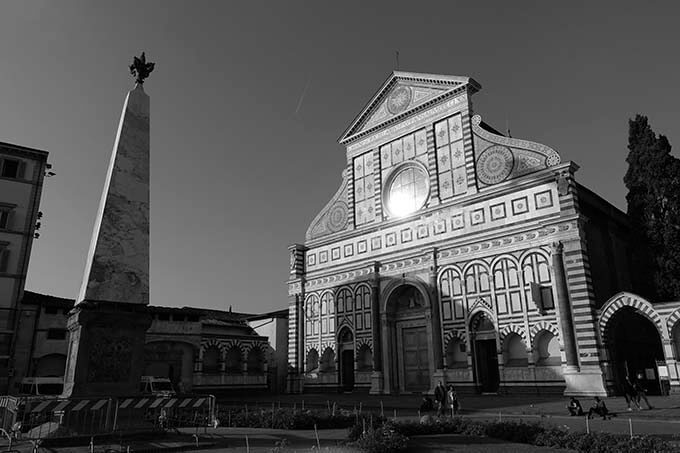
Santa Maria Novella Acqua della Regina, 1533
Literally the world’s oldest continuously existing pharmacy, Officina Profumo-Farmaceutica di Santa Maria Novella is now well into its eighth century.
Yes, eighth century.
Like. 800. Years.
The Florentine institution was constituted by Dominican friars in the early 1200s to make medications, balms and pomades from herbs grown in the monastery’s gardens.
Acqua della Regina, the signature scent created in 1533 for Catherine de’ Medici’s marriage to Henry II, the king of France, remains one of their best selling products till date. Other ancient notables that go back centuries include Acqua di Rose (rosewater), Alkermes liqueur and Elisir di China (post-dinner digestif).
Most of the flowers and herbs are still sourced from the monastic garden. And you can still browse the shelves of the old pharmacy in Florence, which is one of the most gorgeous beauty boutiques in the world.
 Farina Eau de Cologne, 1709
Farina didn’t just invent a single fragrance, it invented an entire category. It was the Italian born and bred Giovanni Maria Farina who first created Eau de Cologne, as an attempt to recapture the sensory soul of his hometown while living in Germany. His exact words, in a letter to his brother: “I have found a fragrance that reminds me of an Italian spring morning, of mountain daffodils and orange blossoms after the rain.”
The fragrance was composed with the essential oils of lemon, bergamot, tangerine, orange, neroli and grapefruit married with dashes of tobacco, petit grain, lavender, jasmine, thyme and rosemary.
It immediately caught the fancy of a populace that was desperately trying to subdue the not-so-pleasant aroma of unwashed bodies and wanted something crisp and fresh, rather than the heavy, musky fragrances of the time.
Farina named the composition after Cologne, the city of his residence, and was soon supplying to every royal family across the world. And it was worth a pretty penny: One vial cost the equivalent of half the year’s wage of a civil servant!
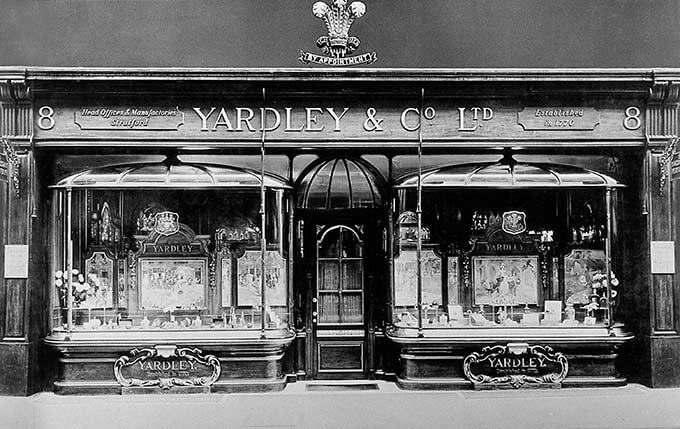
Yardley may be innocuous today but it’s the oldest registered beauty brand in the world. In fact, records show that even though the company was officially founded in 1770, its story actually began in the 1600s, when King Charles I granted a young man the concession to supply all the soap for the City of London.
The key ingredient in Yardley London’s soaps has always been lavender, known for its soothing properties. Till today, there is a special species of lavender – Lavandula augustifolia – that is exclusively grown for Yardley London in the South of England. No wonder the brand continues to enjoy royal patronage, with Kate Middleton being the latest purveyor.
Bonus fact: In 1971, Yardley sponsored the British Racing Motors team in the Formula 1 Grand Prix. In 1972 the company moved on to McLaren, which it sponsored till 1974.
Pears Soap, 1807
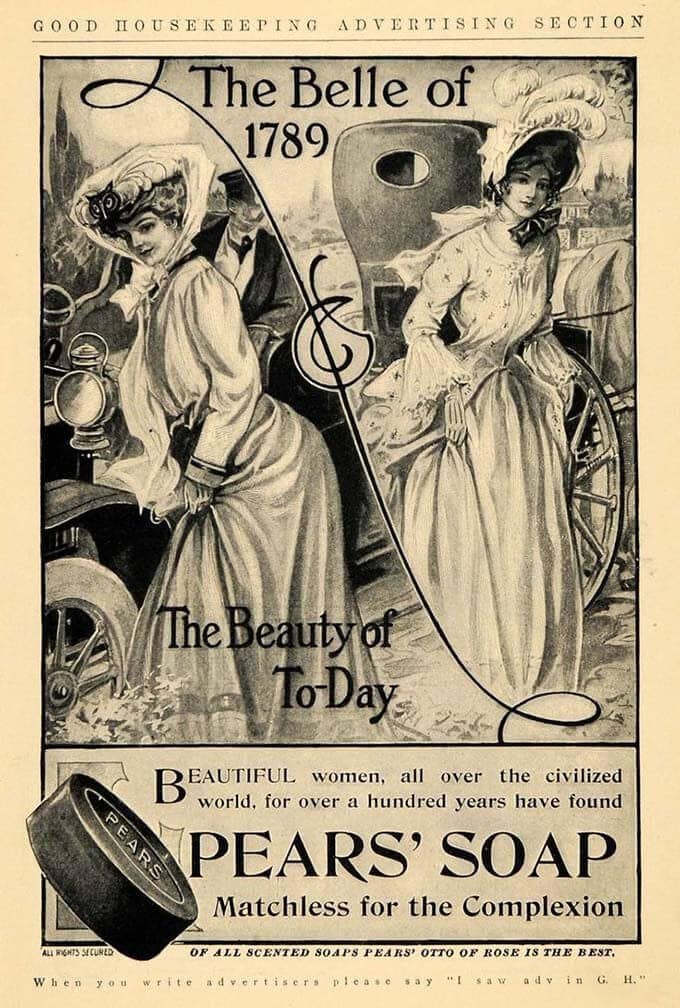
Founded by Andrew Pears in 1789 as a barber’s studio in SoHo, London, Pears was originally reserved for a very exclusive set of peers and nobles. In 1807 (that’s almost 210 years back, people!) came the world’s first transparent soap bar, which was initially billed as an ‘English Complexion Soap’, due to its ultra-gentle formula comprising of glycerin and other natural products.
It took three months to make (still does!) and won the prize for soap at the Great Exhibition in 1851.
P.S. Soap Brows anyone?!
It took three months to make (still does!) and won the prize for soap at the Great Exhibition in 1851.
P.S. Soap Brows anyone?!
Thayers Original Witch Hazel, 1847
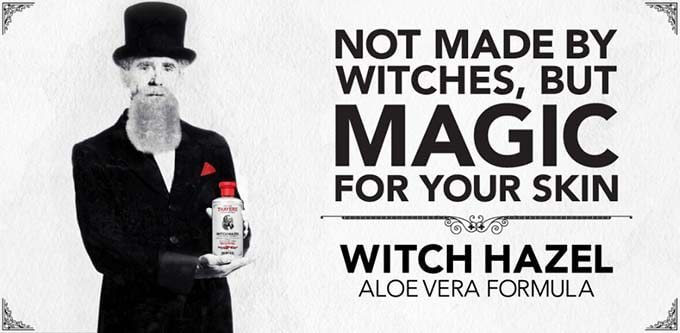
What set apart Thayers from a slew of businesses that were capitalizing on the multifarious benefits of witch hazel was that its extract was made from the non-distilled shrub, thereby maintaining the highest quality of therapeutic tannins. Till today, more than 150 years later, few facial toners can compete with the skin boosting properties of this non-alcoholic astringent.
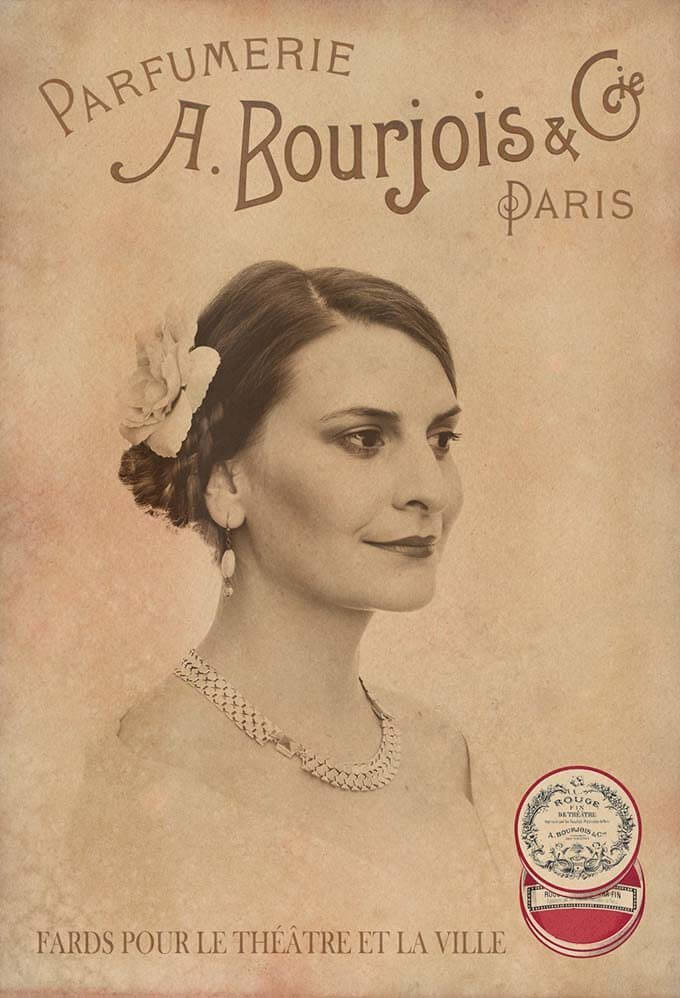
 Bourjois Little Round Pot Blush, 1863
In 1863, Parisian actor Joseph-Albert Ponsin created the world’s first powder blush based on a complex recipe: Carefully combine a measured amount of of powder, water and mother-of-pearl, mix delicately, pour into rounded moulds and put in the oven to bake. Now, 150 years later, the little round pot of Bourjois blusher has gone beyond stage makeup to become one of the brand’s bestselling lines.
has gone beyond stage makeup to become one of the brand’s bestselling lines.
And for collectors who just can’t resist those original iconic Little Round Pots, Bourjois regularly launches limited edition vintage series.
 Penhaligon’s Hammam Bouquet, 1872
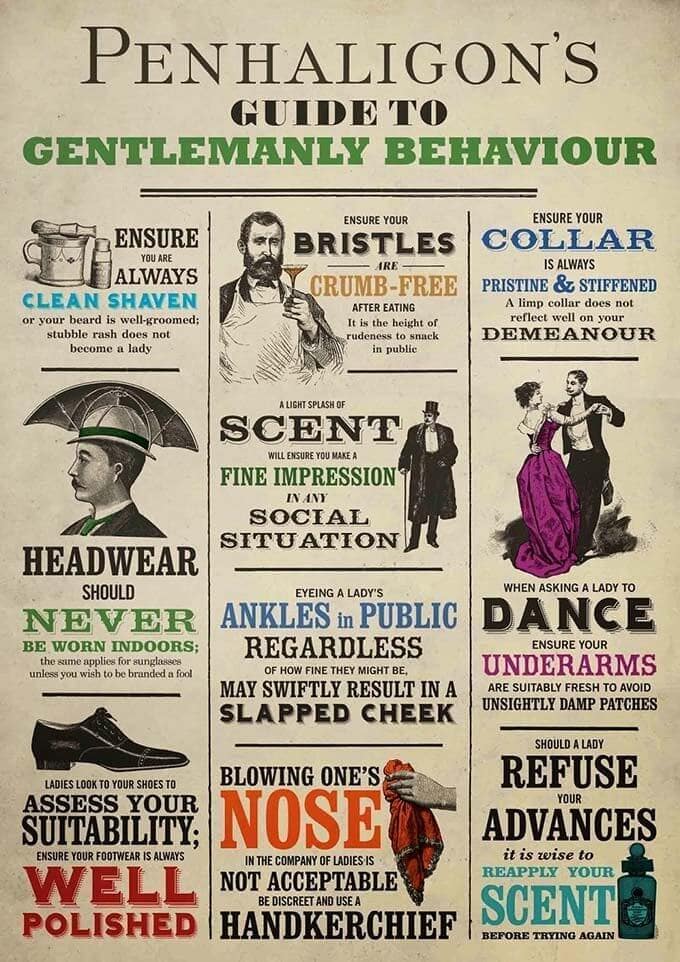
As a brand that has not one but four of its original blends on the shelves more than a century later, it’s no surprise that Penhaligon’s has received a number of royal warrants. The perfumery was founded by William Henry Penhaligon, a Cornish barber who moved to London and set up shop on Jermyn Street in the late 1860s. His first fragrance was Hammam Bouquet, inspired by the heady aromas emanating from the Turkish bath next door.
Hammam Bouquet remains a customer favourite till date, along with Blenheim Bouquet (crafted in 1902 as a bespoke fragrance for the Duke of Malborough), English Fern and Douro (both 1911). Happily for lovers of history, even William Penhaligon’s bottle design remains largely unchanged, with the flash of ribbon taking us back down memory lane to the England of Queen Victoria.
Vaseline, 1872
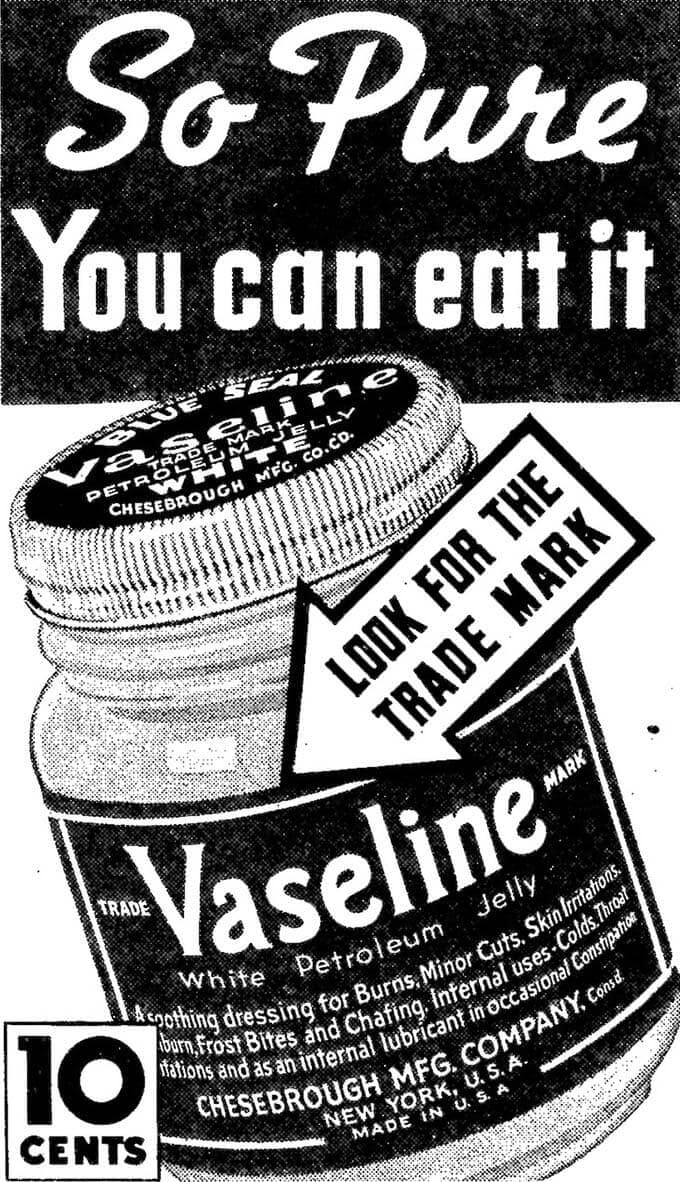
Would you believe that oil wells can be fashionable? In the hands of Robert Chesebrough, that’s a yes. Cheseborough founded Vaseline when he was prospecting for oil at Titusville, Pennsylvania. The observation that oil rig workers used “rod wax” – the drill residue – to heal cuts and minor burns caught the chemist’s imagination. He then spent the better part of a decade refining the rod wax to the clear, white petroleum jelly that became Vaseline. The name came from a combination of the German wasser (water) and Greek oleon (oil).
However, drugstore owners were unimpressed and so Cheseborough took to the road, advertising the wares himself. The modus operandi? He would inflict wounds on his own body and spread Vaseline on the affected areas to show its efficacy (don’t try this at home!).
Soon, Vaseline was selling at the rate of a jar a minute and Queen Victoria knighted Chesebrough in 1883, telling the inventor that she used it every single day!
Bonus fact: Cheseborough ate a spoonful of Vaseline every day. Though I seriously wouldn’t recommend this, the inventor lived to be 96 years old.
Another bonus fact: In 1886, Manufacture and Builder reported: “French bakers are making large use of vaseline in cake and other pastry. Its advantage over lard or butter lies in the fact that, however stale the pastry may be, it will not become rancid.”
Another Bonus fact: Using Vaseline in France nowadays is for a different use.....
Another Bonus fact: Using Vaseline in France nowadays is for a different use.....
Listerine, 1879
Developed by Missouri chemist Joseph Lawrence as a surgical antiseptic, Listerine was named after Baron Joseph Lister, a pioneer of antiseptic surgery. Over the years, this combination of menthol, thymol (thyme), eucalyptol (eucalyptus) and methyl salicylate (wintergreen) has been used for purposes ranging from gonorrhoea and bathing surgical wounds to treating sore throats, soothing insect bites and cleaning the floor.
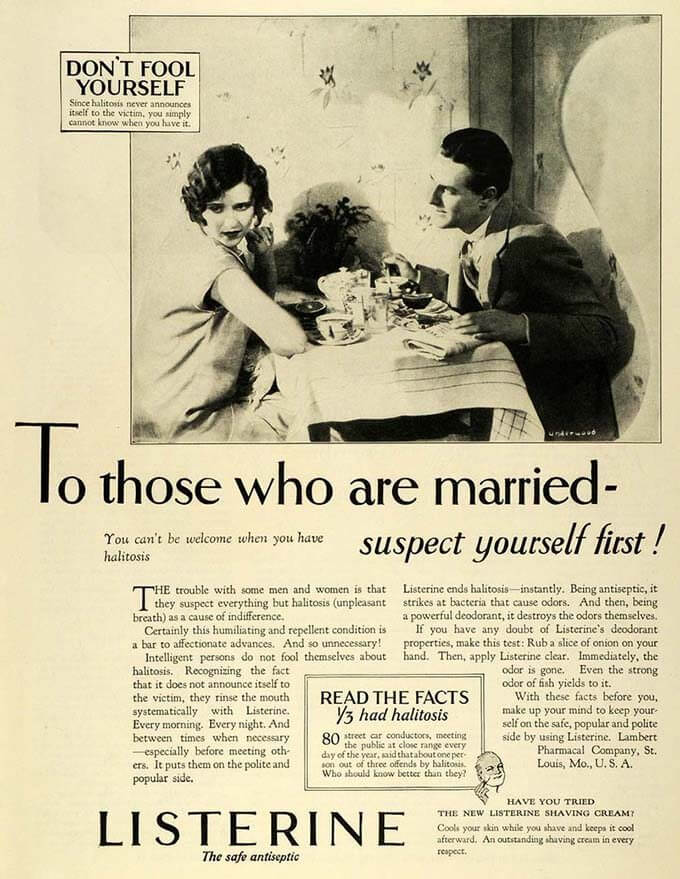
However, Listerine truly hit its stride in 1895, when it caught the attention of dentists. In fact, the word ‘halitosis’ (Latin for ‘bad breath’) was coined by Listerine staff and this became the first over-the-counter mouthwash to be sold without a prescription.
At one point, they were even manufacturing Listerine cigarettes!
Today, the 138-year-old liquid remains the oldest product in the Johnson and Johnson portfolio.
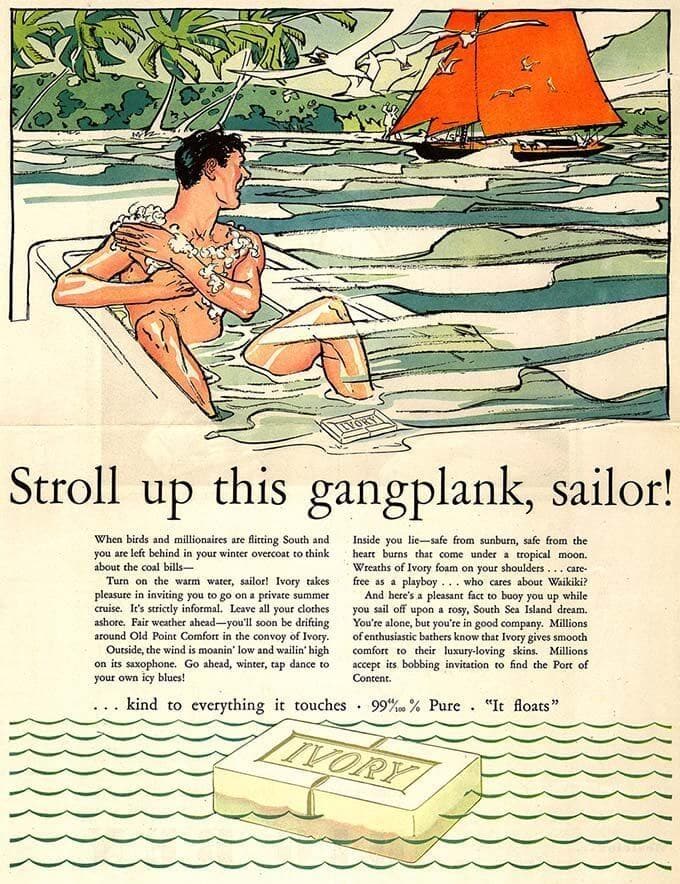
Ivory Soap, 1879
When chemist James Gamble, of Procter & Gamble, whipped extra air into a batch of Ivory soap bars, he not only created the world’s first floating soap (advantage: it wouldn’t get lost while bathing!) but also one that was 99.44% pure. Going strong for 138 years now, Ivory soap also has another well documented use: The soap flakes have been a staple to create “snow” for Christmas trees since the 1920s.
Bonus fact: The name ‘Ivory’ was adopted by Harley Procter after he heard the 45th Psalm at a Bible reading.
WTF fact: Researchers asked children to do a soap taste test in 1994 and Ivory soap tasted the least disgusting. Ummm… !!??
 Smith’s Rosebud Salve, 1892
Invented by Dr. GF Smith as an all-purpose salve to help with issues such as chapped lips, razor burn, haemorrhoids and diaper rash, Smith’s Rosebud Salve is still one of the most multipurpose products out there. I personally use it for everything from dry skin to makeup (every single makeup artist backstage will tell you it makes for the best highlighter!).
And while the salve now comes in more efficient tubes as well, nothing can drag me away from the cool, vintage, pharmacy-type tins. Little wonder that 3,500 tins of Smith’s Rosebud Salve continue to be sold somewhere in the world every day!
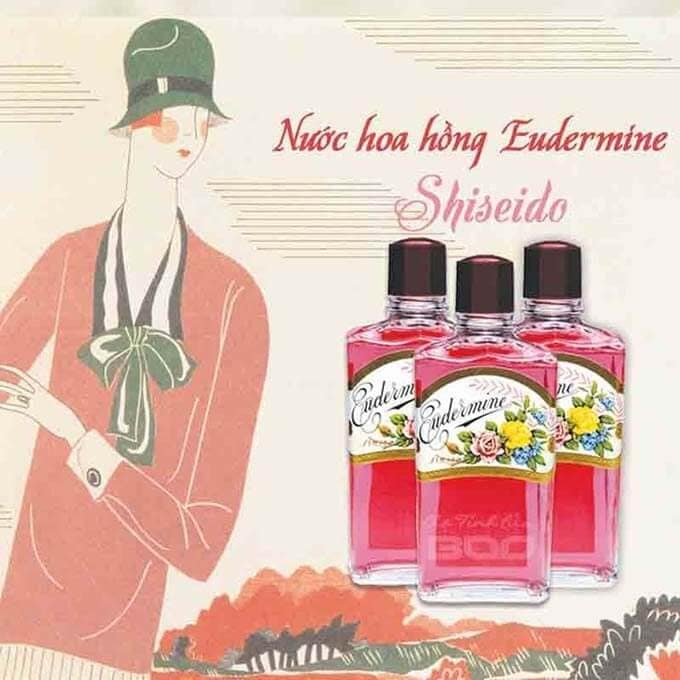
Shiseido Eudermine, 1897
Established in 1872 by Arinobu Fukuhar in Ginza, Tokyo, Shiseido was not only Japan’s first “western style” pharmacy, it was also the one that launched ice cream in the country. The Shiseido Ice Cream Parlour branched off in 1928 and is still in business today.
The brand’s first beauty product – a softening lotion called Eudermine – was launched in 1897. This lotion can still be found on the Shiseido counters 120 years later and in the original packaging style if you look hard enough.
Another cult product – the Shiseido Rainbow Face Powder – is being launched as a limited edition just in time for its centenary. This was one of the world’s first color correcting and mood lighting face powders!
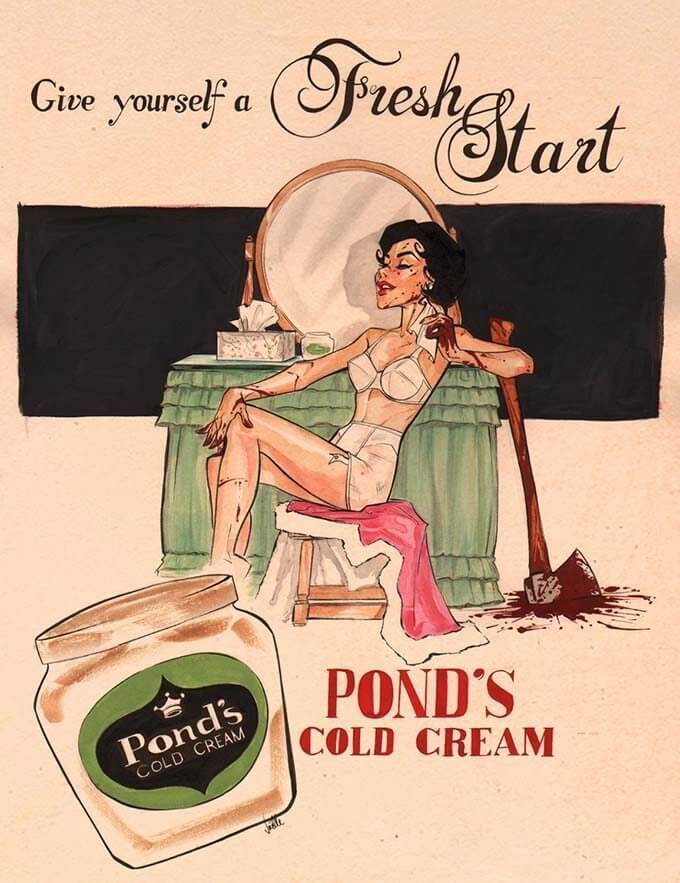
Pond’s Cold Cream, 1907
Pond’s Cold Cream goes back to 1907 but as if that’s not old enough, it’s origins date back even further – to 1846, when pharmacist Theron T. Pond extracted a healing tea from witch hazel that was perfect for healing small cuts, rashes, minor burns and other skin ailments.
This ‘Pond’s Extract’ became the origin for what we, our mothers, grandmothers, great grandmothers and great, great grandmothers came to know as Ponds Cold Cream, used for everything from moisturizing to removing makeup.
Why “cold”? Because this was the world’s first moisturizer that did not require refrigeration.
 Labello Lip Salve, 1909
The precursor to Nivea Lip Care, Labello introduced the slider mechanism to the world of lip balms in 1911. Till then, lip care products were sold as a wedge wrapped up in a bit of paper, to be applied by hands. Later, in 1963, the brand evolved this into today’s twist mechanism. The brand is owned by German Beiserdorf and its name is a combination of labium (lips) and bellus (beautiful).
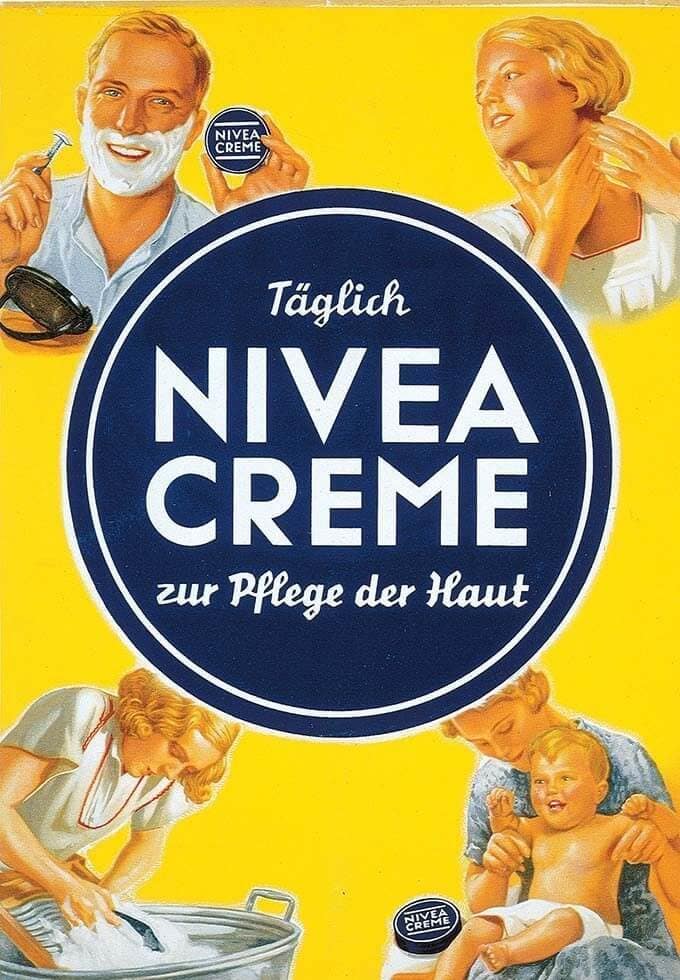
Nivea Crème, 1911
It all started with a butter churner. The butter churner that German pharmacist Dr. Oscar Troplowitz and dermatologist Prof. Paul Gerson Unna used to combine water and oil with Eucerit (ancient Greek word for ‘beautiful wax’), a new emulsifying agent, to create the world’s first stable water-in-oil skin emulsion.
Water-in-oil emulsions are the best way to tackle dry complexions as they moisturize while simultaneously creating a skin barrier.
The word ‘Nivea’ was derived from the Latin nix, nivis, which means ‘snow white’, as an ode to the cream’s pure white color.
And that little blue aluminium pot, which made it’s entry in 1925 (before that Nivea came in a yellow pot), has it’s own ticket to history: Its distinctive blue is one of the very rare color marks protected worldwide.
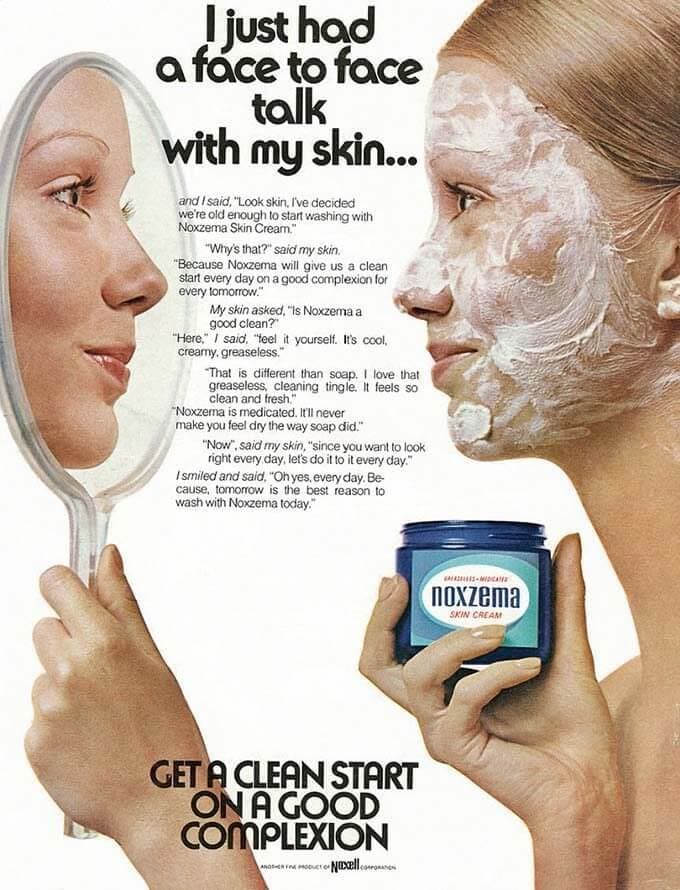
Noxzema, 1914
The ubiquitous cobalt blue jar, which has been a staple of every family home since the last century, was launched in the same year that Archduke Franz Ferdinand was assassinated, leading to the beginning of the first World War. Invented by Dr. Francis J Townsend in Ocean City, Maryland, this greaseless cold cream, which soothes skin and acts as a mild pain reliever, was originally called Townsend R22 and was prescribed to resort-goers for soothing their sunburn.
Soon, it was being called upon for everything from chapped and irritated skin to remove makeup and deep cleanse, keep wrinkles at bay and treat acne.
It has had a near religious following among generations of devotees and a famous consumer quip that, “It knocked my eczema”, led to the name Noxzema (“no eczema”).
Many women left it on overnight, making it the original sleeping mask.
Acqua di Parma Colonia, 1916
When Italian aristocrat Carlo Magnani commissioned a crisp, fresh and citrusy fragrance from a small perfumery in Parma, little did he know that his legacy would last more than a century. Today, Acqua di Parma Colonia remains unchanged from the original 100-year-old composition. In fact, it is still made by hand in small Italian factories, its signature yellow packaging paying homage to the color that’s graced the facades of Parma’s most elegant buildings since the 18th century.
Bonus fact: That logo? It’s the coat of arms of Marie Louise, Duchess of Parma (1816-1847), who helped develop the perfume and glass industry of Parma.
Shout out to @TheBeautyGypsy for this post!
Shout out to @TheBeautyGypsy for this post!


